

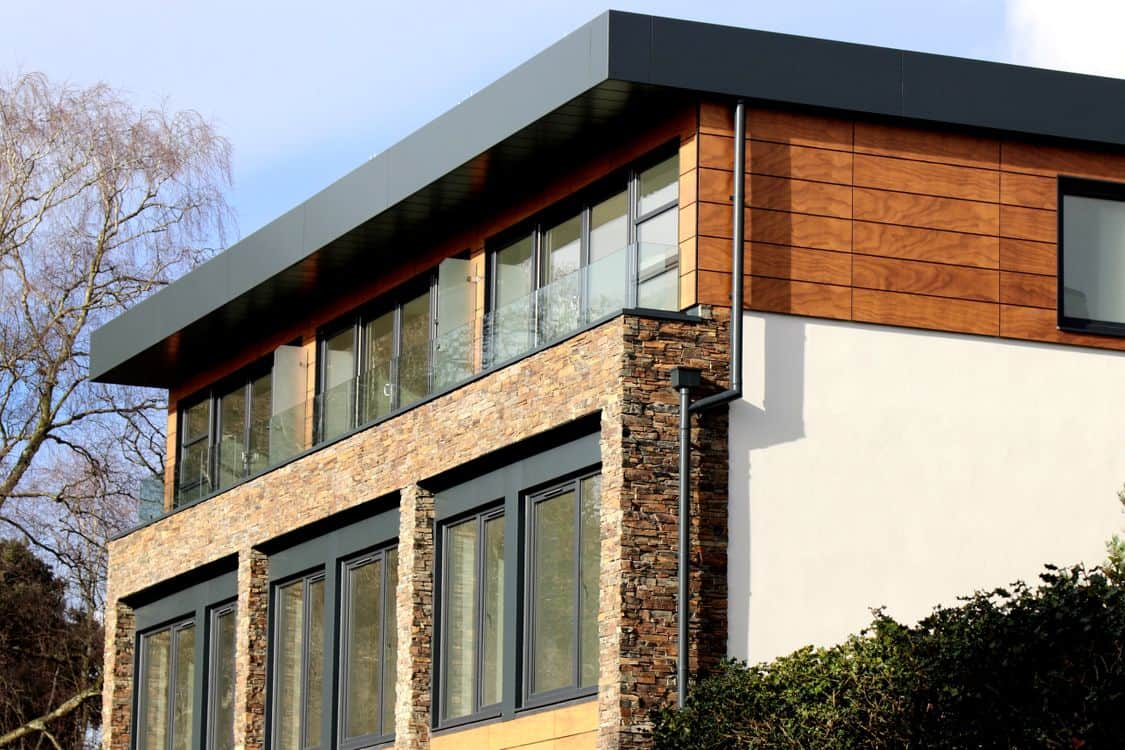
Walk through any older Toronto neighbourhood of row houses, semis, and low-rise buildings and you will see them everywhere: the short walls that rise above the edge of a flat roof. They are called parapets, most homeowners never think about them, and the 2024 building code gave them new attention.
That attention is overdue, because parapets sit at one of the most failure-prone lines on the entire building, and a problem there leaks in a way that is slow, hidden, and expensive to chase down.
The detail the code clarified
Among the changes folded into Ontario’s 2024 code were clarified provisions for wind loads on roof parapets and balcony guards near the tops of buildings, along with provisions for the wind design of attached canopies on low buildings.
Parapets sit at the most wind-exposed line on the whole structure. They catch wind on both faces and are precisely where uplift and pressure concentrate, which is why the code singled them out for clearer design rules rather than leaving them to interpretation.
Why parapets matter on a flat roof

On Toronto’s many flat and low-slope roofs, the parapet is not decorative. It is a functional part of the roofing system. It contains and terminates the roof membrane at the perimeter, it anchors the edge metal and coping, and it is one of the most frequent sources of leaks when any of those details are done poorly.
A failing parapet lets water in at the very edge of the roof, where it can run down inside the wall cavity and do damage long before anyone notices a stain on the ceiling. By the time it shows, the water has often been getting in for a season or more, and the repair involves opening up the wall, not just patching the roof.
What it means for a re-roof
For a homeowner replacing a flat roof, the parapet is one of the details that quietly determines whether the new roof lasts a decade or three. Proper membrane termination up and over the parapet, watertight cap or coping flashing, and correctly lapped edge metal are where low-bid flat-roof jobs tend to fail first.
Flat roofing is also a genuine specialty. The membrane systems, the detailing, and the drainage are different enough from sloped shingle work that not every residential crew does them well. Homeowners with flat roofs are well served by choosing an installer with real low-slope experience and asking specifically about how they handle flat-roof and parapet detailing.
The perimeter is where trouble starts
The broader lesson of the code’s renewed focus is simple: on a flat roof, the field of the membrane is rarely the problem. The trouble starts at the edges, the penetrations, and the parapets, where different materials meet and movement concentrates.
So when you are vetting a flat-roof quote, ask how the contractor handles the perimeter, not just what membrane goes in the middle. Cap flashing, membrane termination, and clean parapet detailing are the difference between a roof that stays dry and one that lets water creep down inside the walls, unseen, for years.